
Basics of Graphic Design: Why Most Businesses Get It Wrong (and How to Fix It)
Why do so many businesses struggle with design even after hiring designers?
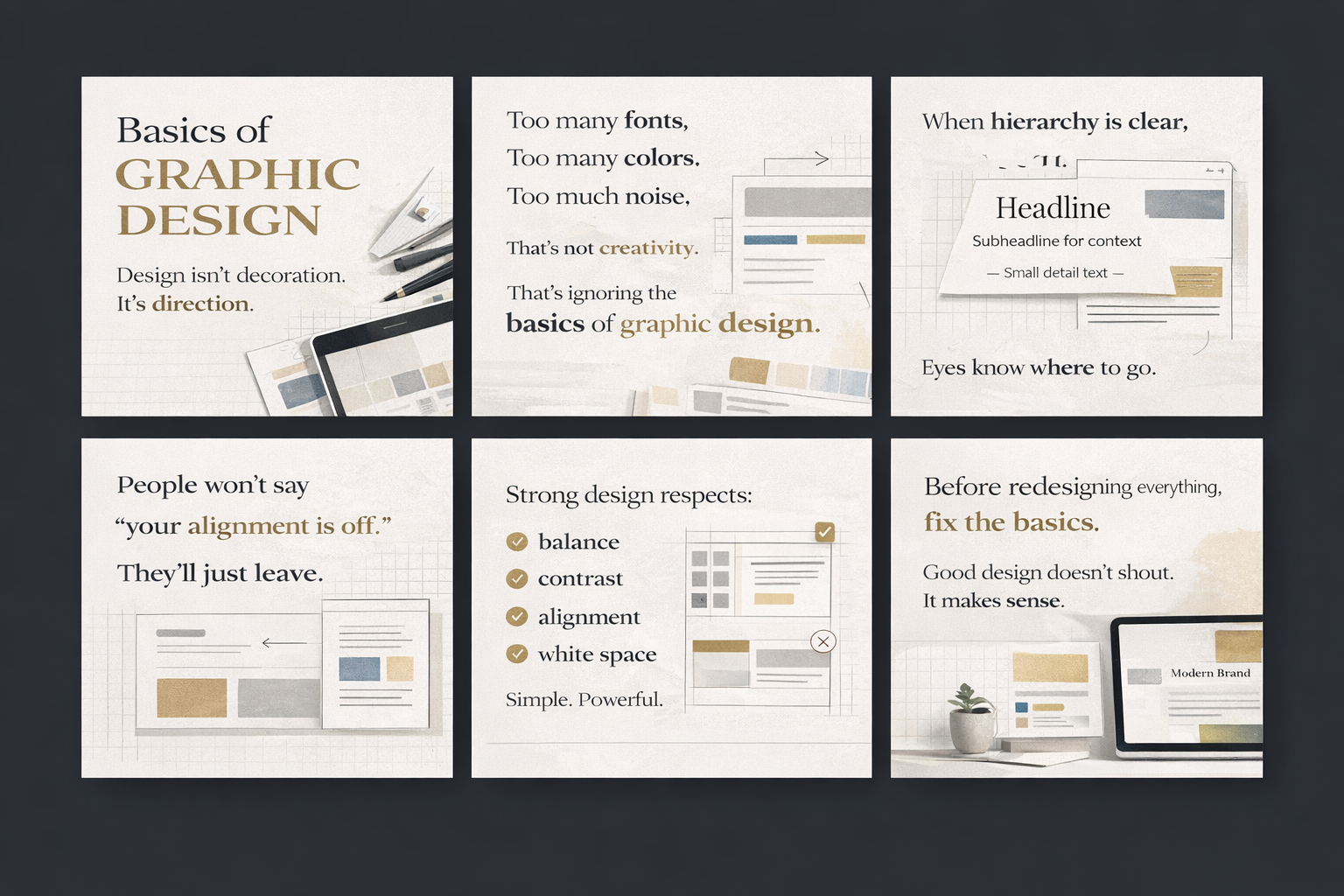
I’ve seen this happen more times than I can count. Basics of graphic design play a critical role in how local and online businesses communicate visually with their audience.
A local business spends money on a logo. An online brand redesigns its website. Everything looks “fine” on the surface. Yet something still feels off. Customers don’t stay. Ads don’t convert. Social posts don’t get noticed.
Most of the time, the issue isn’t creativity.
It’s the missing basics of graphic design.
The basics of graphic design aren’t glamorous. They don’t trend on Instagram. But they quietly decide whether your brand feels trustworthy or messy. For local and online businesses alike, ignoring the basics of graphic design is like building a house without checking the foundation.
Why Basics of Graphic Design Matter for Business Growth.?
Let’s clear a myth first.
The basics of graphic design are not about tools. They’re not about whether you use Canva, Figma, or Photoshop. They’re about how people visually understand information.
This is where graphic design theory, visual design basics, and core graphic design concepts come in. These ideas explain why some layouts feel calm and others feel stressful. Why some brands look premium and others look cheap — even if the product quality is similar. Basics of graphic design help businesses create visuals that feel clear, professional, and trustworthy.
Businesses that understand the basics of graphic design don’t guess. They design with intent.
How do the elements of graphic design influence first impressions?
The elements of graphic design are simple things: color, type, spacing, images, shapes. On their own, they mean nothing. Together, they communicate everything. When basics of graphic design are ignored, even good marketing struggles to perform.
I once worked with a business that had great services but used five fonts on one flyer. Customers didn’t say, “Your typography is confusing.” They just didn’t call.
That’s the power of the elements of graphic design. When they’re aligned, your brand feels confident. When they clash, your brand feels unsure. People sense that immediately.
Why do principles of graphic design matter more than decoration?
Here’s a blunt truth: decoration doesn’t sell. Clarity does.
The principles of graphic design — hierarchy, balance, contrast, alignment, repetition — exist for one reason: to guide attention. They help the eye move naturally.
Local businesses benefit because signage becomes readable. Online businesses benefit because websites stop overwhelming users. Respecting the principles of graphic design doesn’t limit creativity; it focuses it. Many successful brands focus on basics of graphic design before spending on advertising.
Are graphic design concepts useful for non-designers?
Absolutely — especially for business owners.
Graphic design concepts help you make decisions faster. They help you explain feedback clearly. Instead of saying “something feels off,” you can say, “The hierarchy isn’t clear” or “There’s no visual focus.” Understanding the basics of graphic design reduces confusion and improves consistency.
Businesses that understand basic graphic design concepts collaborate better with designers. This is exactly how studios that work quietly and professionally — like the kind you’d come across while browsing visoradesign.in — operate with informed clients.
Which basic graphic design skills should every business owner have?
You don’t need to become a designer. But you do need basic graphic design skills.
Knowing when text is too small. Knowing when colors clash. Knowing when spacing feels tight. These basic graphic design skills protect your brand from poor decisions.
I’ve seen businesses lose credibility simply because they ignored spacing. Not pricing. Not service. Spacing.
Do graphic design rules kill creativity?
Only if misunderstood.
Graphic design rules exist to create clarity, not to kill ideas. Think of them as road rules. You can still drive fast, but without lanes, traffic collapses.
Businesses that respect graphic design rules look intentional. Businesses that ignore them look chaotic. Creativity works best inside structure. For growing companies, basics of graphic design act as a long-term foundation.
How do graphic design techniques affect marketing results?
Marketing doesn’t fail loudly. It fails quietly.
Graphic design techniques like visual hierarchy, contrast control, and typography pairing directly affect whether people read, click, or ignore.
A strong offer with weak design struggles. A decent offer with strong graphic design techniques often wins. That’s not theory — that’s everyday marketing reality.
Why are visual design basics often underestimated?
Because they’re invisible when done right.
Visual design basics decide whether a page feels calm or chaotic. Whether a post feels premium or amateur. Customers won’t explain why they trust one brand over another — but visual design basics play a huge role.
Good visuals don’t shout. They guide.
How does graphic design theory support long-term branding?
Trends fade fast. Theory doesn’t.
Graphic design theory explains why some brands look timeless while others age badly. Businesses that rely only on trends constantly redesign. Businesses grounded in theory build systems that last. According to design studies, visual consistency improves brand recognition and trust.
This is why mature brands feel stable even as they grow.
Can the basics of graphic design improve consistency?
Without question.
Consistency isn’t about copying layouts. It’s about repeating logic. The basics of graphic design create that logic. They align your visuals across platforms without forcing sameness.
That’s how brands start looking “put together” instead of patched together.
Why do customers trust well-designed businesses more?
Because design sends signals.
Clean layouts suggest order. Balanced visuals suggest care. Clear hierarchy suggests professionalism. When basic graphic design skills are applied well, customers assume the business is equally careful elsewhere.
It’s unfair — but it’s how humans judge.
How do graphic design techniques differ online and offline?
The environment changes, not the rules.
Offline design needs clarity at a glance. Online design needs clarity in motion. But the same graphic design techniques apply — hierarchy, contrast, spacing.
Only the execution changes.
Are graphic design basics important for service businesses too?
Especially for service businesses.
Services sell trust. Design either supports that trust or damages it. Using visual design basics correctly helps service brands look reliable before a conversation even starts. Our graphic design services help businesses apply strong design fundamentals in real projects.
Why should businesses fix design basics before spending on ads?
Because ads amplify whatever already exists.
If your visuals are weak, ads amplify weakness. If your basics of graphic design are solid, ads amplify clarity. Fixing design fundamentals first saves money later.
Final thoughts: are the basics of graphic design optional today?
Not anymore.
In crowded markets, the basics of graphic design decide who feels credible and who feels forgettable. Local businesses use them to look established. Online businesses use them to look trustworthy.
Design isn’t decoration.
It’s how your business speaks without words.